Search This Blog

Showing posts with label points of interest. Show all posts

Saturday, November 3, 2012

The Region of France known as Brittany


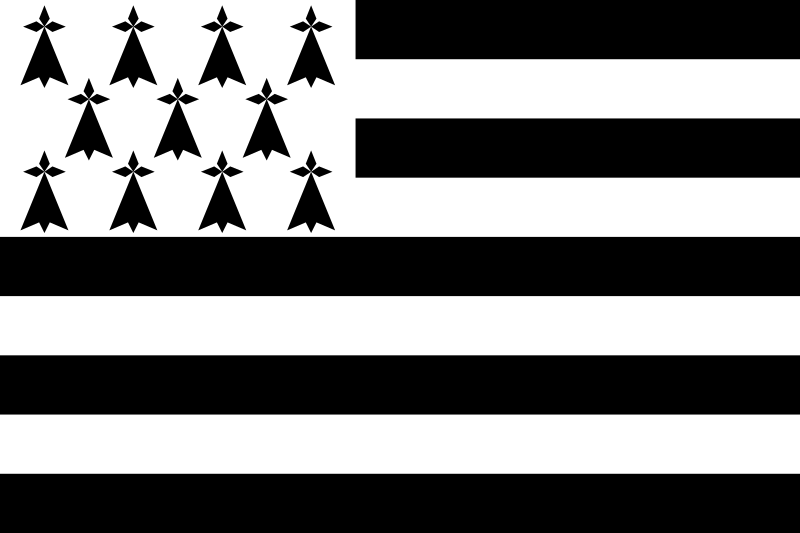
The Flag Of Brittany


Brittany is a cultural region in the north-west of France. Previously a kingdom and then a duchy, Brittany was united to the Kingdom of France in 1532 as a province. Brittany has also been referred to as Less, Lesser or Little Britain (as opposed to Great Britain). Brittany is considered as one of the six Celtic nations.

Brittany occupies the northwest peninsula of continental Europe in northwest France. It is bordered by the English Channel to the north, the Celtic Sea and the Atlantic Ocean to the west, and the Bay of Biscay to the south. Its land area is 34,023 km² (13,136 sq mi). The historical province of Brittany is divided into five departments: Finistère in the west, Côtes-d'Armor in the north, Ille-et-Vilaine in the north east, Loire-Atlantique in the south east and Morbihan in the south on the Bay of Biscay.

Friday, November 2, 2012

Why You should visit theTower of London


Photos of Tower of London, London
This photo of Tower of London is courtesy of TripAdvisor
Type: Historic Sites, Landmarks/ Points of Interest
Activities: Group tours/walking tour, Ice skating
Fee: Yes
Owner description: One of London's most famous landmarks, the historic Tower houses the Crown Jewels, the prison cell of Sir Walter Raleigh, known as the Bloody Tower,... more »

Rated: 4-1/2 stars


ABOUT THE TOWER OF LONDON

Her Majesty's Royal Palace and Fortress, more commonly known as the Tower of London, is notated as a historic castle along the northern bank of the Thames River in central London, England, United Kingdom.

It sits inside the London Borough of Tower Hamlets, slightly separated from the east edge of the square mile of the City of London, by an open space referred to as Tower Hill.

The tower was founded towards the end of 1066 as part of the Norman Conquest of England.

The White Tower, which gives the entire castle its name, was built by William the Conqueror in the year 1078, and was seen as a resented symbol of oppression, inflicted upon London by the new ruling elite.

The castle was used as a prison since at least 1100, although that was not its primary purpose.

A grand palace early in its history, it served as a royal residence.

As a whole, the Tower is comprised of several buildings set within two concentric rings of defensive walls and a moat. There were several phases of expansion, mainly under Kings Richard the Lionheart, Henry III, and Edward I in the 12th and 13th centuries.

The general layout established by the late 13th century remains despite later activity on the site.